
1
Enter Your Topic, Keyword, or Summary
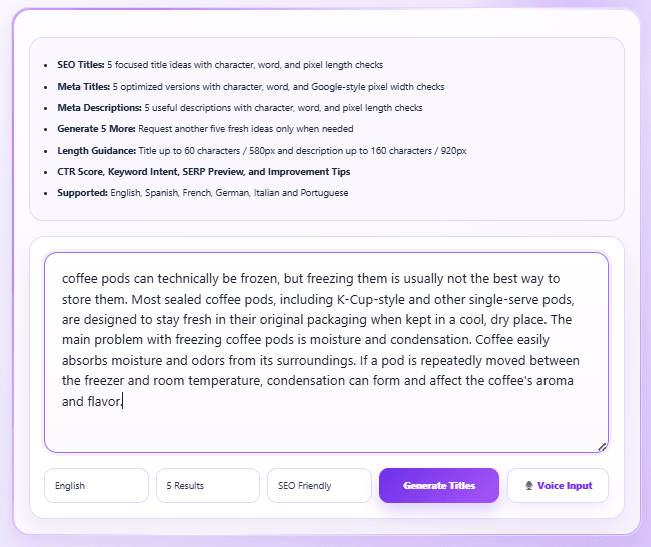
Type your keyword, topic, short summary, or full paragraph into the input box. You can also choose the language, number of results, and title style before generating.
Use this powerful free title maker to generate instantly 5 optimized titles for better search engine visibility.
aititlgenerator.com is a free SEO AI title generator that helps website owners create clear titles, meta titles, and meta descriptions. Based on my testing with real web pages, better results usually come from using relevant keywords and describing the page accurately.
The tool can generate SEO-friendly title ideas that match the page topic and search intent. Clear, relevant titles can also help users understand a search result before clicking, which may support better click-through rates and organic visibility.
I have also compared different title tools, including Ahrefs’ SEO Title Generator and the ahrefs meta title generator. This testing helped me focus aititlgenerator.com on giving users title and meta content options in one place.
Different projects need different types of titles. That is why aititlgenerator.com offers dedicated tools for blogs, YouTube videos, books, stories, research papers, presentations, products, campaigns, business names, and more. Instead of using one general tool for every task, users can choose the generator that best matches their content type and goal.
Type your keyword, topic, short summary, or full paragraph into the input box. You can also choose the language, number of results, and title style before generating.
Click the Voice Input button and speak your topic. The tool can turn your spoken idea into text so you can generate titles faster.
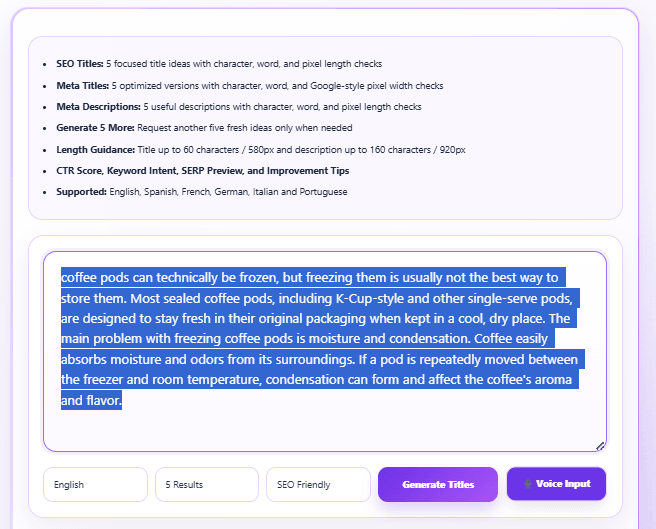
Click Generate Titles. The tool shows five results with SEO titles, meta titles, meta descriptions, SEO score, CTR score, keyword intent, length checks, SERP preview, and improvement tips.
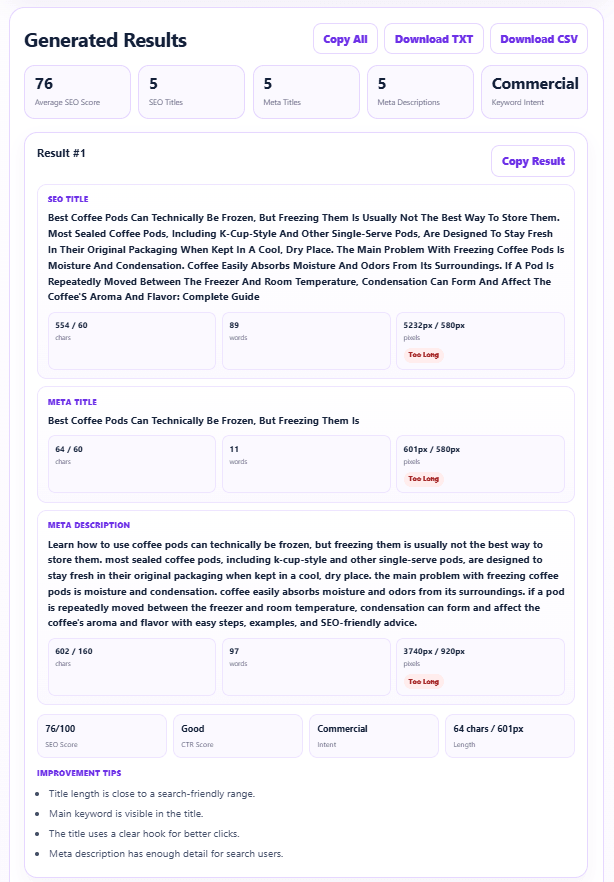
Need more choices? Click Generate 5 More to request another fresh set of title ideas and compare more options before choosing your final title.
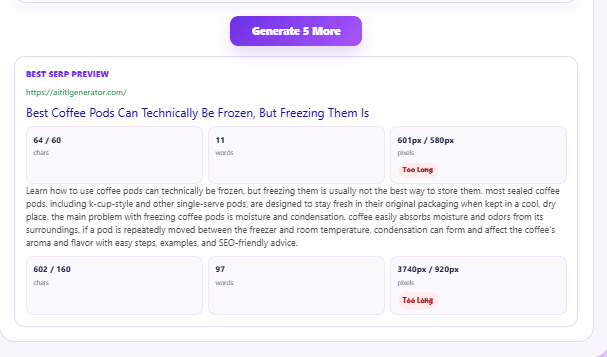
Enter your topic, keyword, or short description in the generator above. Review the results, compare the options, and choose wording that accurately matches your content.
Explore different ways to present your topic, from direct search-focused titles to more creative headlines.
Compare shorter search-result titles that keep the main topic clear and place important words early.
Draft concise page summaries that explain what readers will find after clicking.
Use the tool’s estimated feedback to compare options. The score is guidance, not a prediction of real clicks or rankings.
Review the likely purpose behind a search, then check that your chosen title matches your page.
See an approximate search-result presentation before publishing. Actual Google titles and snippets may differ.
Different content needs different titles. A blog post should answer a reader’s question, while a YouTube title also needs to work with the video thumbnail. Use a specialized generator when you already know where the title will appear.
Start with the general tool above if you are still exploring ideas. Switch to a specialized tool when you need titles for a particular format.
Your SEO title and meta description have different jobs. The title should identify the page and its main topic. The description should give readers a useful reason to visit without repeating the title word for word.
| Element | What to include | What to avoid |
|---|---|---|
| SEO title | Main topic, clear benefit, and natural wording | Repeated keywords or claims the page cannot support |
| Meta description | A short, accurate summary of the page | Generic text that could describe any page |
| On-page heading | A clear H1 that tells visitors what the page offers | A heading unrelated to the search result |
Topic: How to choose a blog title
There is no guaranteed character limit for Google results. Display length varies by device and wording, and Google may generate a different title or snippet.
Writing for readers in another language? Use a language-specific title generator to explore natural phrasing rather than translating an English headline word for word. Review local expressions and search intent before publishing.
Keep the meaning and audience in mind. A headline that works in one language may need a different structure in another.
Writing a strong title can take several attempts. An AI title generator gives you starting points so you can spend more time checking the wording against your actual content.
Compare direct, question-based, list-style, and benefit-focused title ideas for the same topic.
Make it clear whether your page teaches a process, compares options, answers a question, or presents a product.
Explore fresh wording when several articles in a series sound too similar.
Compare candidate titles alongside your final article instead of choosing a headline before the content is ready.
Generated suggestions still need human review. Check accuracy, clarity, originality, and whether the title reflects the page.
When every headline starts to sound the same, change the input rather than asking for more random titles. Add the audience, the main question, and the result your content actually provides.
Too broad: Coffee pods
More useful: A beginner’s guide comparing coffee pod types, machine compatibility, and cost per cup
Possible title: Coffee Pod Types Explained: Compatibility and Cost
Use the generated options as drafts. If the tool suggests a claim you cannot support, remove it. For a detailed writing workflow, read How AI Helps Overcome Writer’s Block .
Anyone who needs a clear, relevant title can use the general generator. The best wording depends on the content format and the people who will read or watch it.
Explore search-focused article titles, how-to headlines, and concise meta descriptions.
Draft video titles that communicate the subject and work alongside the thumbnail.
Compare book and story title ideas that fit the genre, theme, and intended readers.
Develop clear research and presentation titles that describe the actual subject.
Brainstorm campaign headlines, product names, and short descriptions.
Explore title variations for readers in different languages and markets.
An AI title generator suggests possible titles from a topic, keyword, or short description. You can compare the results and edit the wording to match your content.
Enter a specific topic or description in the tool above, generate suggestions, review the results, and choose a title that accurately describes your page. Add your audience and content goal for more focused ideas.
They can help you explore clearer wording and align titles with search intent. A generated title alone cannot guarantee rankings or clicks. The page also needs useful content that delivers on the title.
The SEO title identifies the page in search results. A meta description summarizes the page and helps readers decide whether it answers their question. Search engines may display different text.
Keep it concise and put the main topic early. There is no fixed character limit that guarantees full display. Preview the title and remove unnecessary words.
Review it first. Check that the title is accurate, not misleading, suitable for your audience, and sufficiently distinct from similar content.
It is an estimated quality signal for comparing title options. It does not measure actual click-through rate or predict how Google users will respond. Use Google Search Console to evaluate real performance after publication.
Use the site’s language-specific generators where available. Review grammar, natural phrasing, and the intended audience before publishing.
A useful title tells readers what to expect and gives them a clear reason to continue. Use the generator above to explore ideas, then compare your favorites with the finished content. Check search intent, remove exaggerated claims, and preview the result before publishing. The strongest choice is the one that fits your page and its readers.